

When the sales director at a Miami residential brokerage sat down to review her team’s Q1 numbers, the deals closed column looked respectable. What concerned her was the column nobody tracks: deals that started well and then quietly disappeared.
She had 25 agents handling inbound buyer enquiries across two offices. Calls were happening all day. Prospects were expressing interest. Agents were following up – or thought they were. But somewhere between the first conversation and the second, context was dying. Buyers who had mentioned a specific school district, a must-have garage, a flexible timeline if the right unit appeared – all of that intelligence was living in individual agents’ heads, and not surviving to the next interaction.
“We weren’t losing leads because our product was wrong or our agents weren’t trying,” she said. “We were losing them because the second call felt like the first one. The buyer had to repeat themselves. The agent was starting from scratch. And in real estate, that moment of disconnection is the moment you lose the relationship.”
What was actually happening on the calls
When her team began using CallVibe, the picture that emerged surprised her – not because it was dramatic, but because it was so consistent.
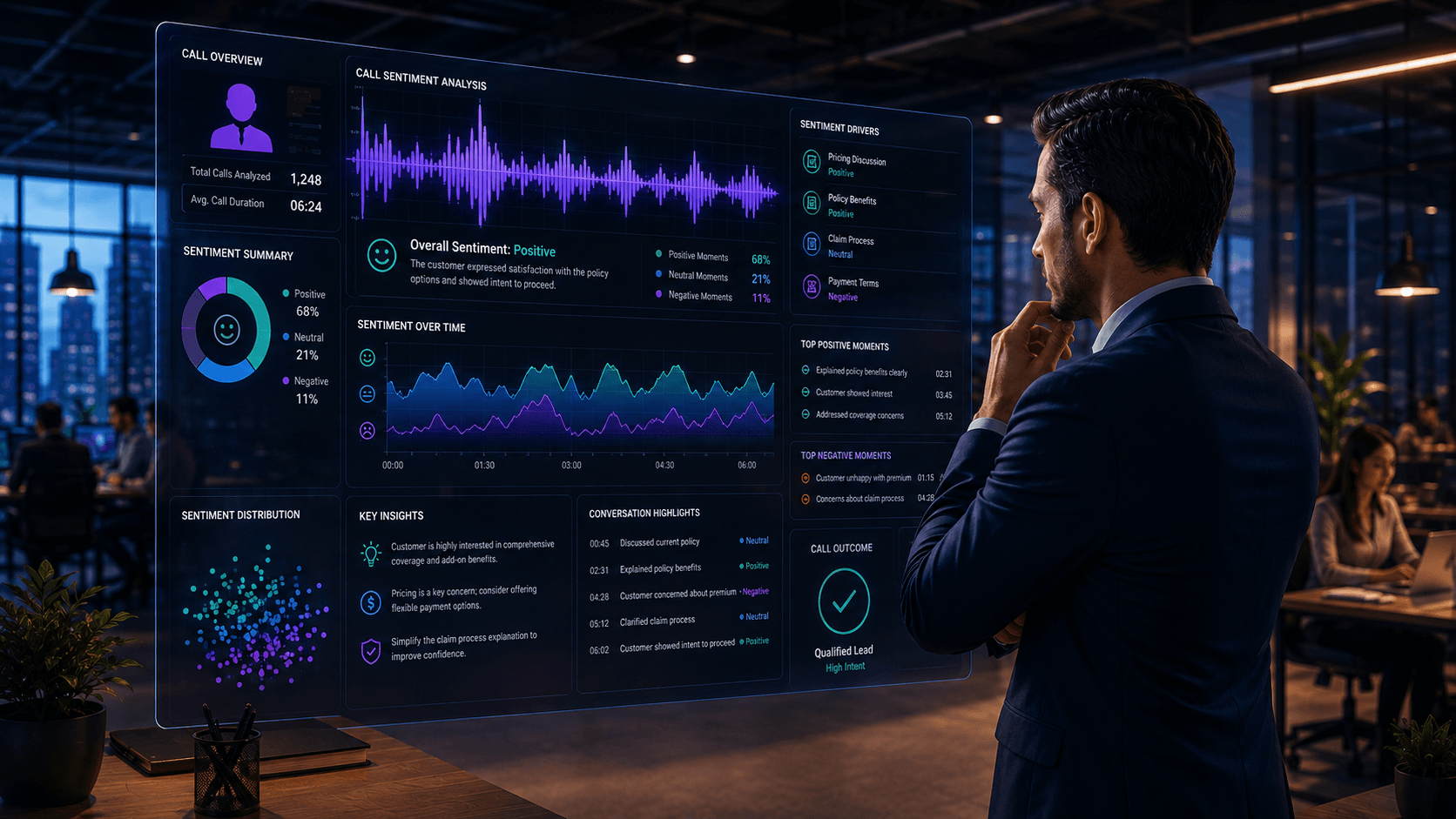
The AI action summaries from the first week of calls showed the same pattern repeating across multiple agents: buyers were sharing specific, high-value preference information in the first five minutes of a call – neighbourhood preferences, deal-breakers, life circumstances driving the timeline – and that information was simply not making it to the follow-up interaction.
One buyer mentioned she needed to be within walking distance of a specific school. The agent noted it mentally, got pulled into another call, and followed up three days later with three properties – none within that school’s catchment. The buyer stopped responding.
Another buyer was flexible on price but had a hard move-out date in eight weeks. That urgency was never flagged. The agent followed the standard two-week follow-up cadence. The buyer had already signed with a competitor.
These were not failures of effort. They were failures of information and CallVibe made them visible for the first time.
The change that happened within 30 days
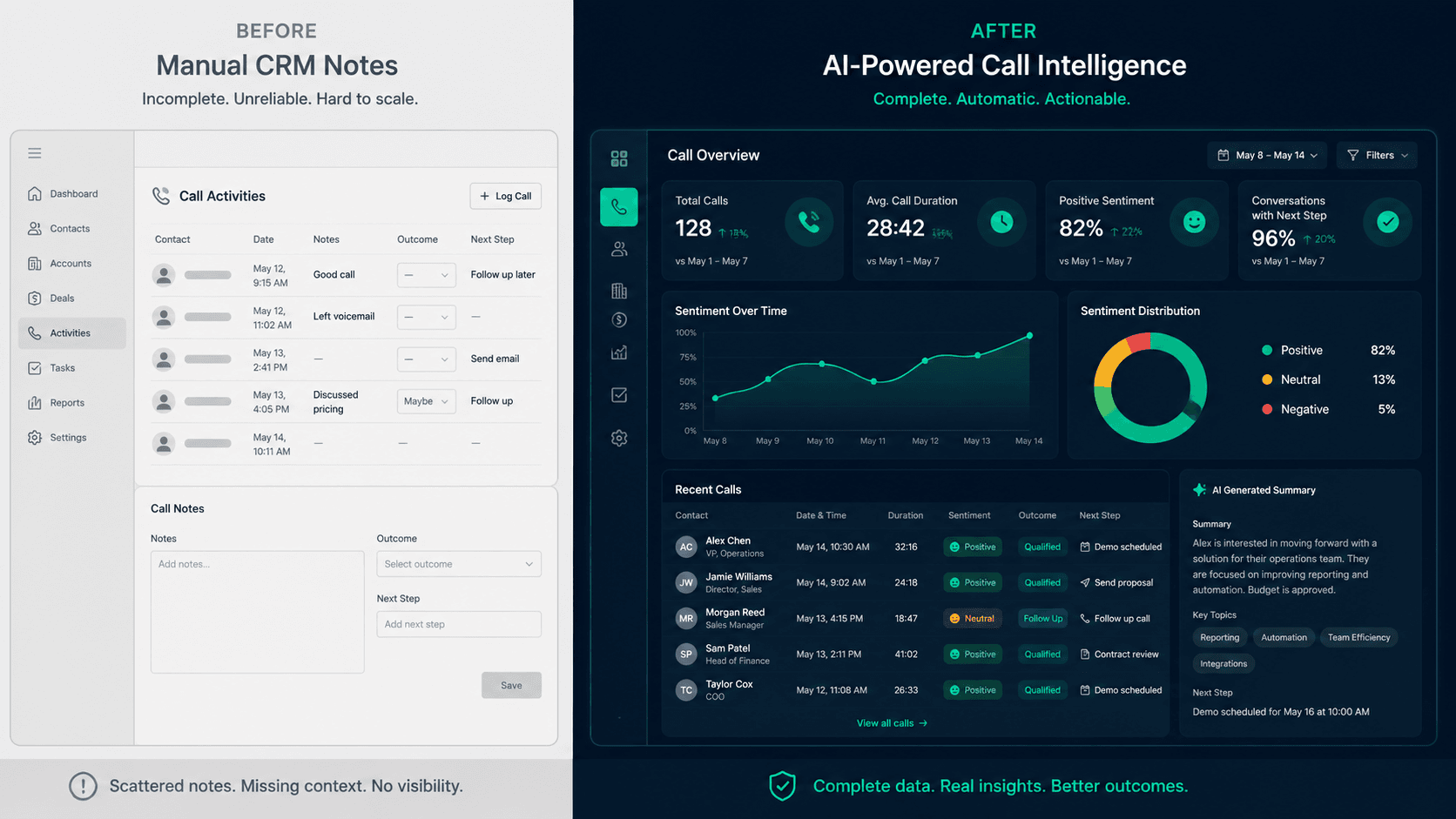
Once agents could review their own call summaries immediately after each conversation, two things changed. First, follow-up emails became specific: referencing what the buyer had actually said, addressing the objection they had raised, confirming the action the agent had promised to take. Second, agents stopped needing to reconstruct context from memory before a second call, the summary was already there, structured and ready.
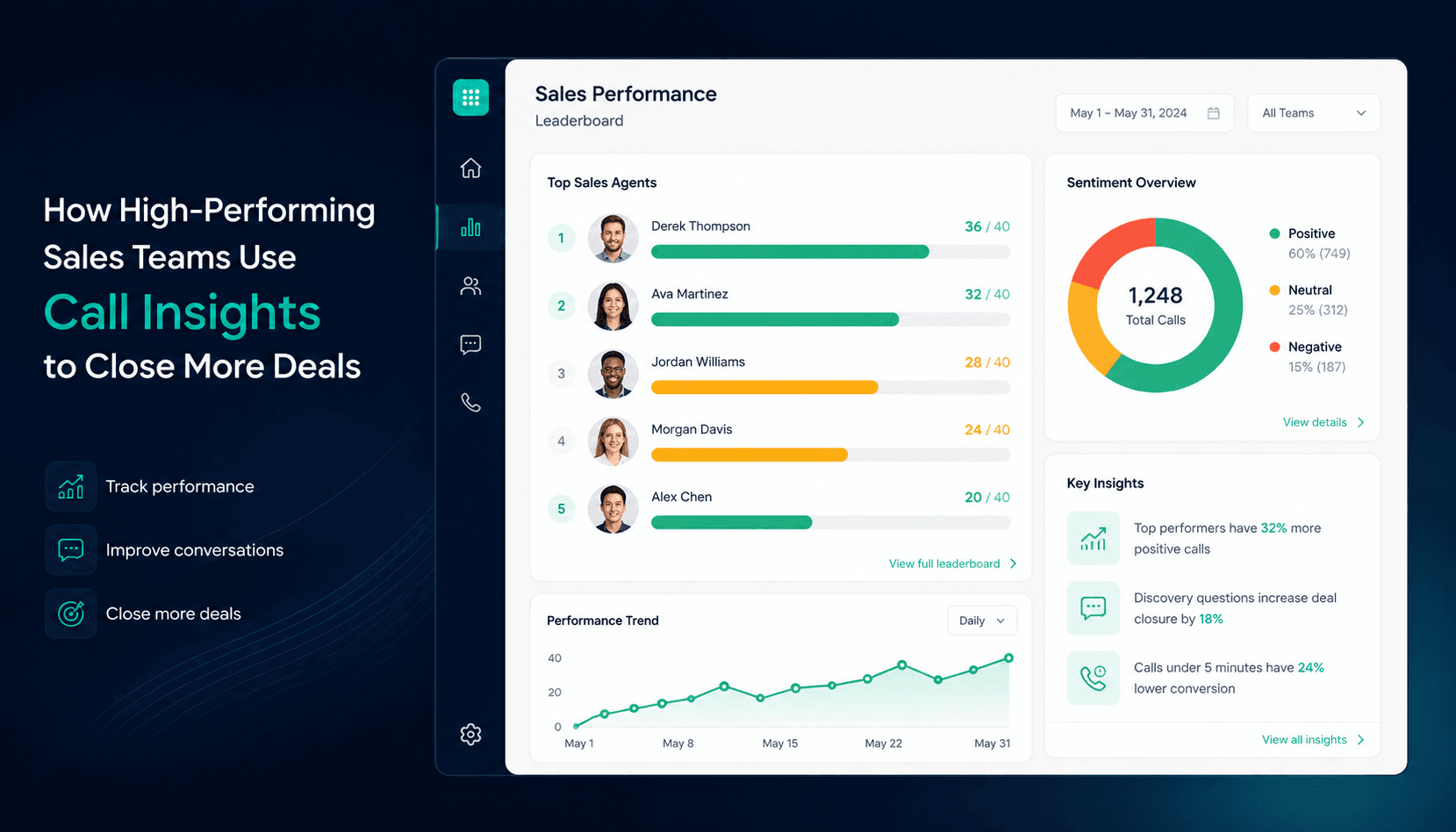
For the sales director, the change was equally significant. She now had visibility across every buyer conversation her team was having – not just the ones she happened to sit in on. She could see which agents were asking the right discovery questions and which ones were rushing to property suggestions before understanding what the buyer actually needed. She could see which objections were coming up repeatedly and address them in the next team briefing with real examples, not hypotheticals.
“I used to coach based on what I could observe, which was maybe 5% of actual conversations. Now I coach based on what’s actually happening and the conversations I wasn’t in are often the most instructive.”
The numbers after 90 days
Within 90 days of implementing CallVibe across the sales team:
Lead-to-viewing conversion improved by 22%. The primary driver was consistent follow-up that referenced real buyer preferences – buyers who felt heard were more willing to commit to a viewing.
Average time from first enquiry to viewing booking dropped by four days. Agents were acting on buying signals they had previously missed: urgency cues, timeline mentions, flexibility signals that indicated a prospect was ready to move faster than the standard follow-up cadence assumed.
Manager coaching time became more efficient. The sales director was spending less time guessing at performance issues and more time on targeted development, one-on-ones where she could reference a specific call moment rather than offering generic feedback.
“The data didn’t just tell us we needed to improve,” she reflected. “It told us exactly where, and exactly which agents needed what kind of support. That specificity is what made the difference.”
What this means for real estate sales teams
The real estate market rewards speed, personalization, and follow-through. Buyers remember which agents made them feel understood, and they return to those agents when they are ready to move. That experience of feeling understood is built in the follow-up and the follow-up can only be personalised if the first conversation was properly captured.
AI call intelligence does not replace the skill of a good agent. It gives that skill a foundation to stand on, ensuring that what was learned in one conversation is never lost before the next one.
For sales directors managing teams across multiple offices or territories, it solves a visibility problem that ride-alongs and CRM notes have never been able to address at scale. Every conversation becomes a data point. Every pattern becomes visible. Every coaching conversation becomes specific.
And for the buyer, who just wants to feel like the person they spoke to last week actually listened – it makes the difference between a second conversation and a signed contract.
Ready to see what is happening on your sales team’s calls? CallVibe automatically transcribes, scores, and summarises every call – so you coach smarter and never lose context on a deal again.
Book a demo at callvibe.ai
Frequently Asked Questions
- Does CallVibe work with my existing real estate CRM?
Yes, CallVibe integrates with Salesforce, HubSpot, LeadSquared, GoHighLevel, and MobileCRM. Call summaries, buyer preferences, and action items sync automatically after every call, with no manual input from the agent. - Do agents need to do anything differently on their calls?
No. CallVibe runs in the background on your existing telephony system. Agents have no additional steps – the AI captures, transcribes, and summarises every call automatically. - How quickly are call summaries available after a call ends?
Summaries are generated and available within seconds of a call ending. Agents can review their own summary