
There is a version of a sales call that ends with a follow-up email written in 45 minutes, a CRM updated from memory three days later, and a deal that quietly disappears two weeks on because nobody remembered what the prospect actually said they cared about.
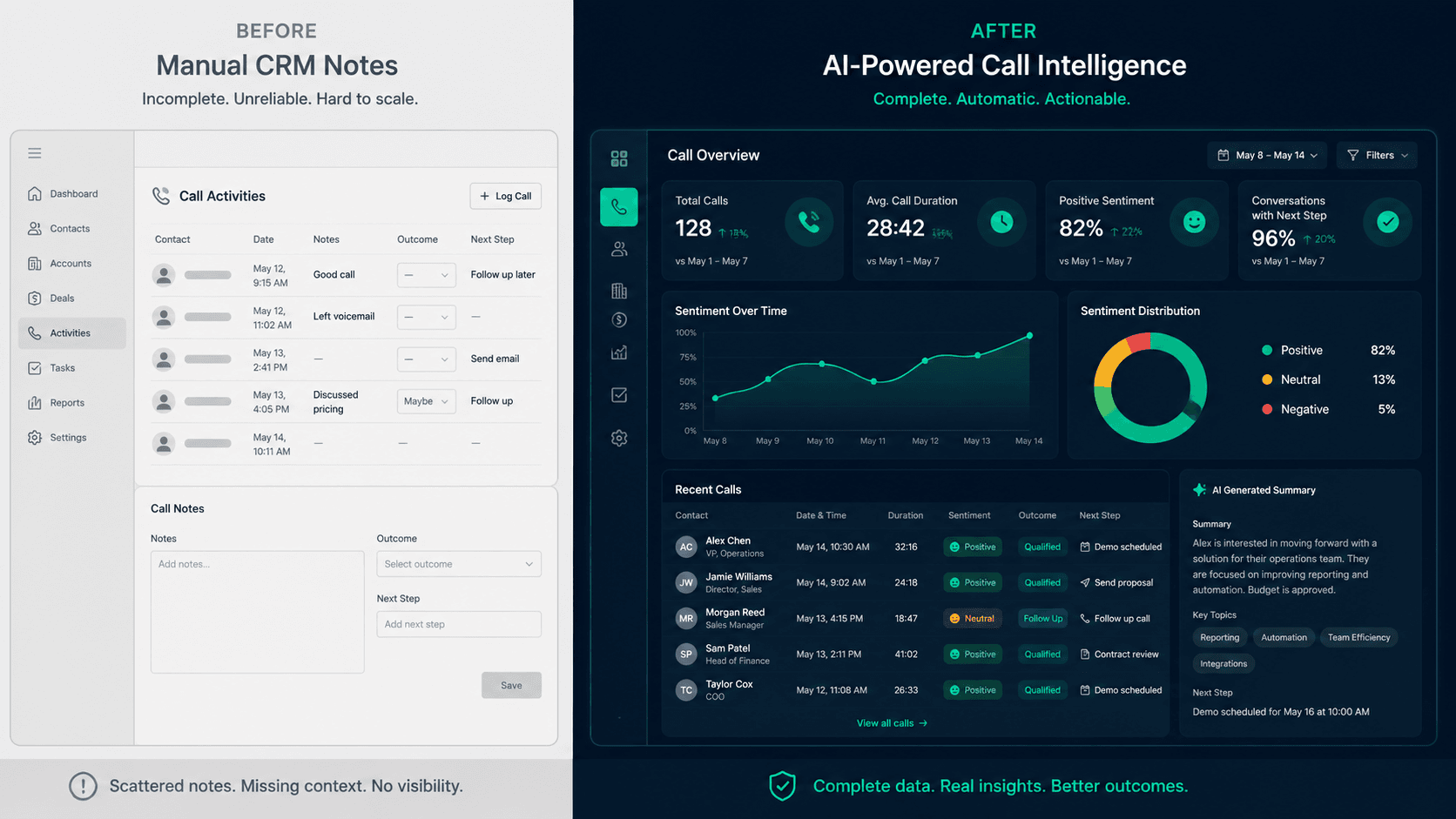
And there is another version. Same call. Different team. Notes taken automatically. Summary waiting in the inbox. Action items pushed to the CRM before the rep has closed their laptop. Follow-up email personalised and sent within 12 minutes.
The difference is not talent. It is not effort. It is information – specifically, what your team does with the intelligence hidden inside every sales call.
“The best sales teams in 2026 are not the ones with the most calls. They are the ones who learn the most from every single one.”
What ‘call insights’ actually means – and why most teams ignore them
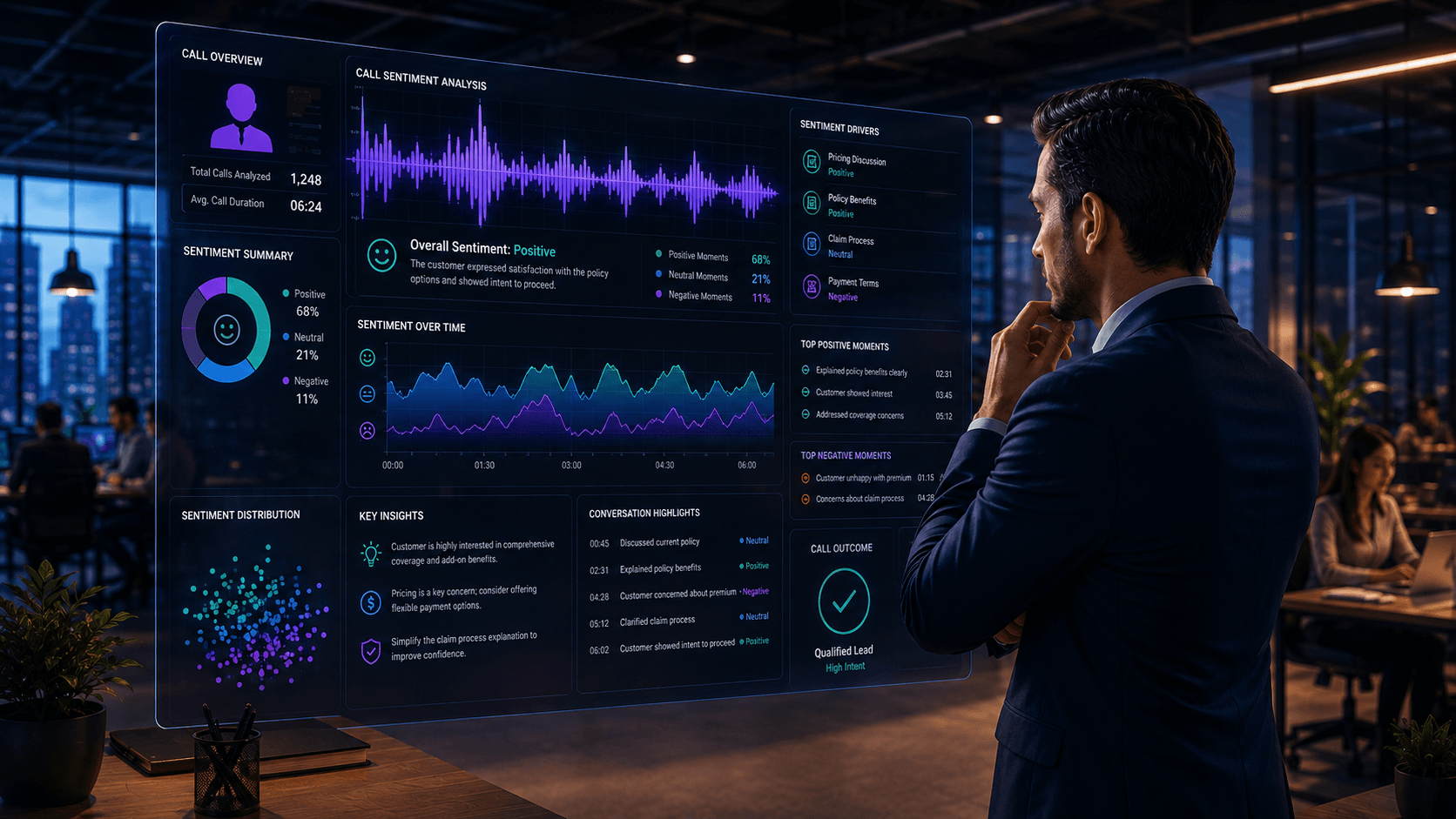
Call insights are the data that lives inside your conversations. Not the data in your CRM – the data that never makes it there. The sentiment shift when a prospect mentions a competitor. The hesitation before the pricing question. The buying signal buried in line 47 of a transcript nobody ever reads.
Most teams ignore this information entirely – not because they do not value it, but because capturing it manually is impossible at scale. A manager with 15 reps cannot listen to 60 calls a week. A rep cannot take notes, hold a conversation, and track sentiment simultaneously.
So the insights disappear. And so do deals.
5 ways high-performing teams use call insights differently
1. They know what their best reps are actually doing
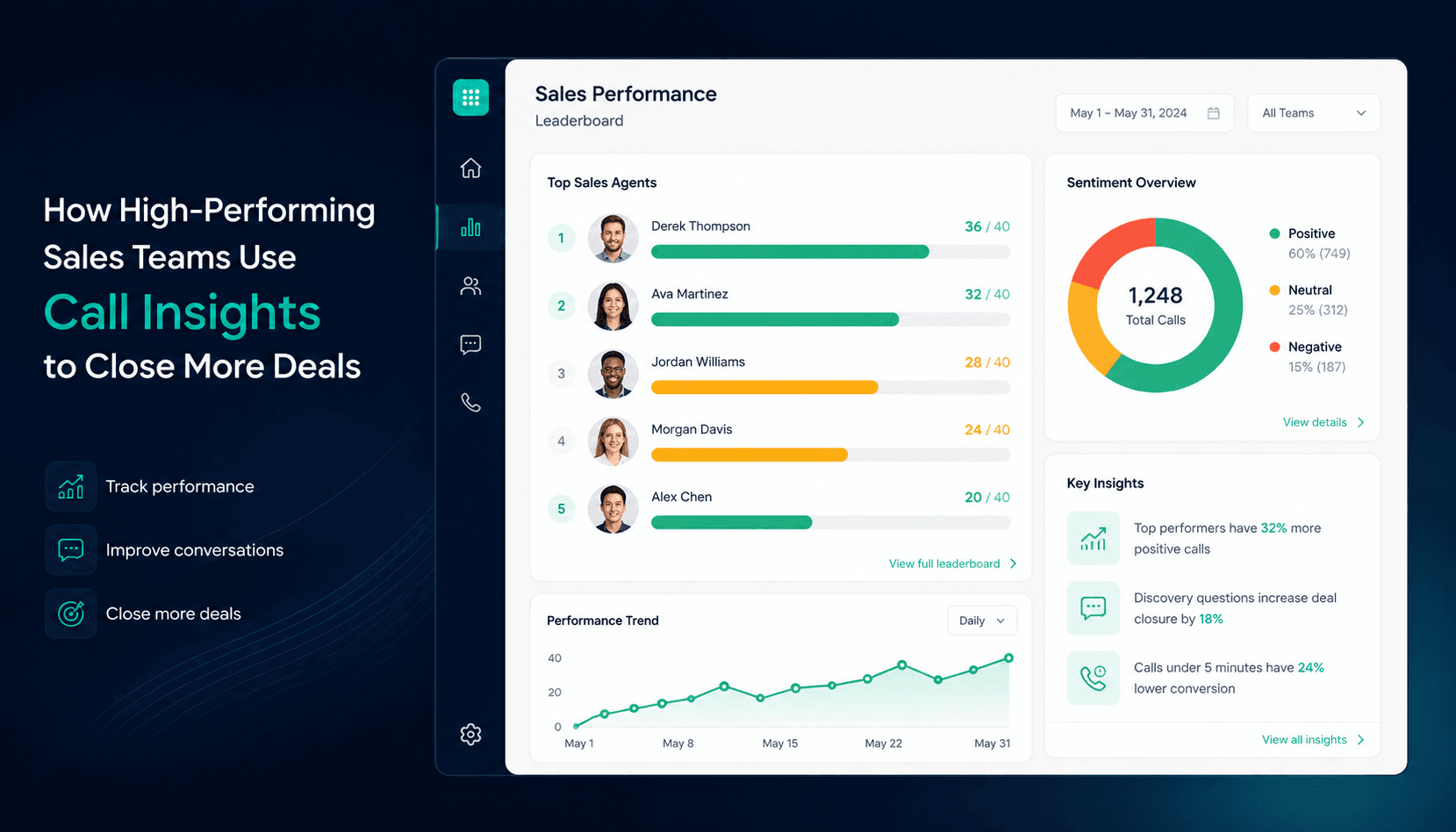
Top-performing sales teams do not guess what separates their best reps from the rest – they measure it. They look at talk ratios, discovery question frequency, next-step confirmation rates, and objection handling patterns across every call.
| What the data shows: top-quartile reps speak 43% of the time on discovery calls. Bottom-quartile reps speak 72%. That 29-point gap is not personality – it is a coaching opportunity hiding in every recorded call. |
When you can see this data across your whole team – not just the three calls you managed to listen to this week – you can coach with precision instead of instinct.
2. They catch at-risk deals before they go dark
Every lost deal leaves a trail. A sentiment drop two calls before the prospect went quiet. A competitor mention that did not get addressed. A pricing concern that got deflected instead of answered. These signals exist in the call data – but only if someone is looking.
High-performing teams use call intelligence to set alerts that fire the moment these signals appear. Not after the deal is lost. During the call or immediately after – when there is still time to act.
“The deal was not lost on the day they went silent. It was lost on a call three weeks earlier, when a signal appeared and nobody caught it.”
3. They follow up with context, not just speed
Speed matters – deals followed up within two hours of a call are three times more likely to advance. But speed without context is just noise. A generic ‘great speaking with you’ email sent 20 minutes after a call moves nobody.
The follow-ups that advance deals reference specific things from the conversation. The pricing concern raised in minute 14. The integration question that came up near the end. The commitment the rep made to send a case study. This level of personalisation used to take 30-45 minutes to write. With AI-assisted drafting from call transcripts, it takes under 15.
4. They never lose deal context when reps change
One of the most expensive problems in sales is the deal handoff. A rep leaves, transfers, or is reassigned. The new rep inherits a CRM record with three incomplete notes and a ‘will follow up next week’ activity from four months ago.
High-performing teams treat their call library as institutional memory. Every conversation, every summary, every action item – available to the next rep on day one. No rebriefing. No restarting relationships from scratch. No lost context.
5. They use coaching data to build repeatable performance
The best sales managers do not just coach the reps they remember to coach. They coach the reps who need it most – identified by data, not by who happened to sit near them this week.
Call scoring surfaces which reps are struggling with objection handling, which ones are confirming next steps on less than half their calls, and which ones are improving week over week. That data turns coaching from a reactive exercise into a systematic process.
What this looks like in practice
Riya Singh is an account executive at a 40-person SaaS company. Her manager used to spend Sunday evenings trying to remember which calls from last week were worth reviewing. Now, every Monday morning, three flagged calls appear on her dashboard – identified by AI as needing coaching attention based on score, sentiment, and talk ratio data.
Her manager spends 40 minutes on Monday instead of three hours on Sunday. The coaching conversations are specific. Riya knows exactly what to work on. Her score has gone from 6.8 to 8.1 in eight weeks.
This is not a success story from a 500-person enterprise team. This is what happens when a mid-size sales team starts treating their calls as data – not just conversations.
The tools that make this possible
Five years ago, capturing and analysing call insights at scale required a dedicated operations team and an enterprise software contract most growing companies could not afford. Today, AI-powered conversation intelligence tools have made this accessible to any sales team with a phone and an internet connection.
The key features to look for:
- Real-time transcription with speaker labelling and keyword search
- Automatic call summaries and action item extraction
- AI call scoring across talk ratio, objection handling, and next-step confirmation
- Multi-condition alerts for at-risk deal signals
- CRM integration that pushes call data automatically – not manually
The teams pulling ahead in 2026 are not doing more than their competitors. They are learning more from what they are already doing – and acting on it faster.
Ready to see how your team’s calls actually perform?
CallVibe analyses every call automatically – transcriptions, scores, action items, and at-risk signals. Start your free 14-day trial or drop your details below, and we’ll reach out.